
Long-range flight
Beyond the road network
Autonomous drones carry emergency medical supplies across regions, islands, and congested corridors, covering the long, hard distances where ground transport falls short.

Autonomous Medical Delivery
Akron Aerospace builds drones that fly where ground transport can't reach. Our vision is a medical delivery system that runs without human intervention.
Why It's Needed
Roads cross islands poorly, mountains slowly, and traffic not at all. When blood is late, patients pay for it. We are building the delivery path for the places ground transport can't serve in time.
Long-range flight
Autonomous drones carry emergency medical supplies across regions, islands, and congested corridors, covering the long, hard distances where ground transport falls short.
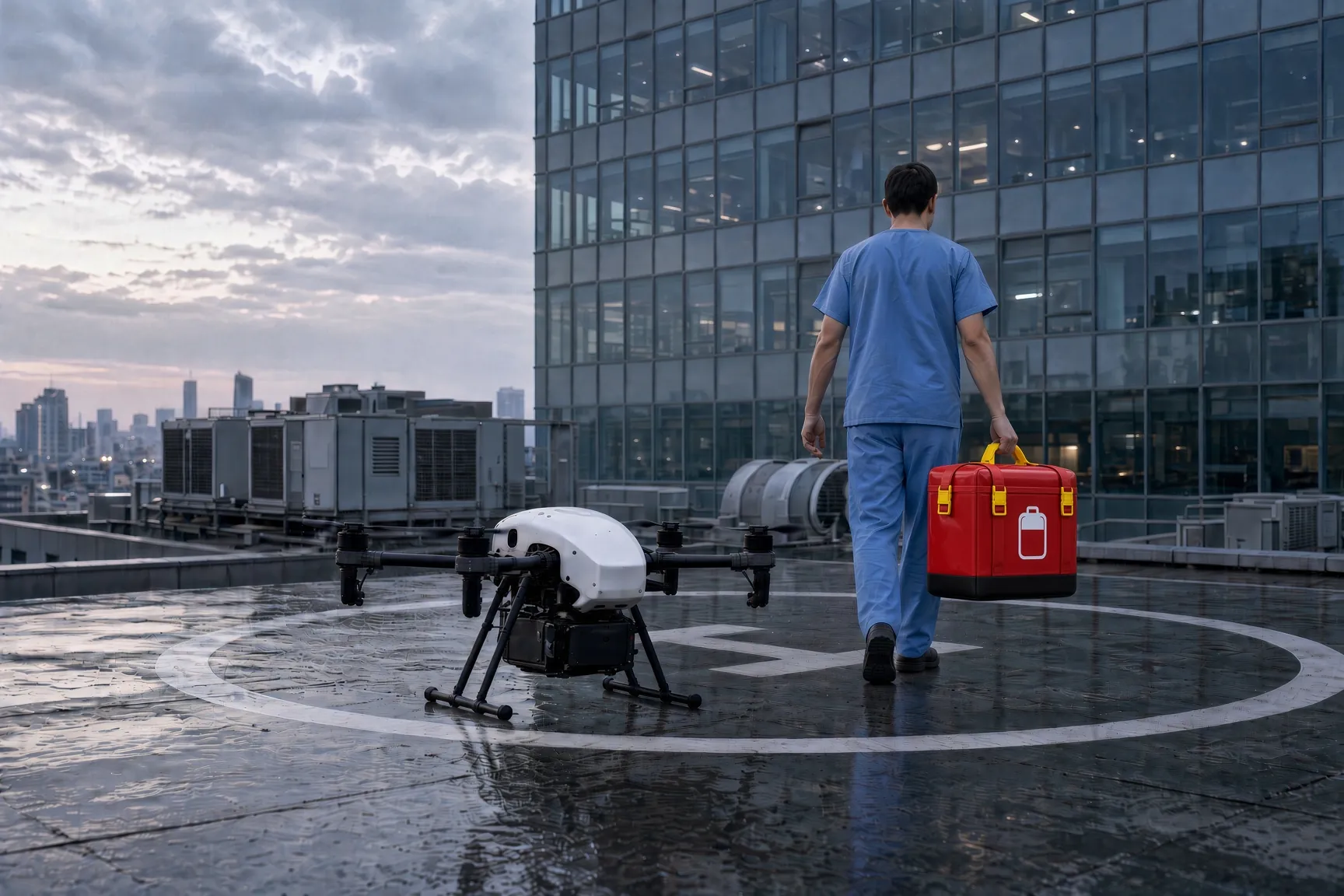
Door to door
Our vision is a delivery system where every handoff is seamless, so critical supplies move from origin to bedside without delay.
How It Works
01
Care staff load the supplies at the origin. The system plans the route and clears the flight on its own.
02
The drone flies the planned route autonomously, from takeoff to landing.
03
The drone lands at the destination, where the care team receives the supplies.
Flight Platform
An autonomous drone built around one requirement: emergency medical supplies must arrive in usable condition.

Where It Flies
Getting blood to patients before the window to treat them closes.
Moving specimens to testing labs faster, so results come sooner.
Connecting islands to hospitals without waiting on ferries.
Cutting over traffic when minutes decide the outcome.